
Clarify the regulatory information journey
Organize public information around functions, publications and relevant service destinations.
Government & aviation · Pakistan
Pakistan Civil Aviation Authority
A distinct regulatory website for Pakistan Civil Aviation Authority, combining a React frontend, Umbraco content management, .NET Core APIs and a custom workflow engine.
Aviation regulation & public information
The project
An aviation regulator’s website must make institutional information, regulatory material and service destinations understandable to different audiences. The PCAA project provides a dedicated public presence for the regulator, with a technology foundation that separates content publishing, presentation, application services and custom workflow logic.
The challenge
PCAA’s public information needs differ from those of an airport operator. Visitors may be seeking a regulatory publication, a directorate, a safety-related information route or a specialist service portal. The website therefore needs a clear regulatory identity and a navigation structure that supports those tasks.
PCAA’s public experience is organized around institutional functions, legal instruments, regulatory publications, news and portal access. The website preserves a regulatory identity and information structure appropriate to these audiences, alongside a separate public platform for the Pakistan Airports Authority.
Design objectives
Organize public information around functions, publications and relevant service destinations.
Give PCAA its own branding, content structure and public-facing experience, distinct from the airport authority.
Combine a CMS, visitor interface, APIs and a custom process engine with clearly defined responsibilities.
The solution
The PCAA website provides a dedicated entry point into regulatory information and connected service destinations. Its navigation distinguishes institutional functions from legal and regulatory material, while a portal directory collects links to specialist systems. Public announcements and news sit within the same institutional experience.
The confirmed website stack comprises Umbraco, React, .NET Core APIs and a custom workflow engine. The CMS is the content foundation; React presents the visitor experience; APIs supply an application boundary; and the workflow engine represents custom process execution. This is the same family of technologies as PAA, applied to a separate regulatory information context.

Explore the experience
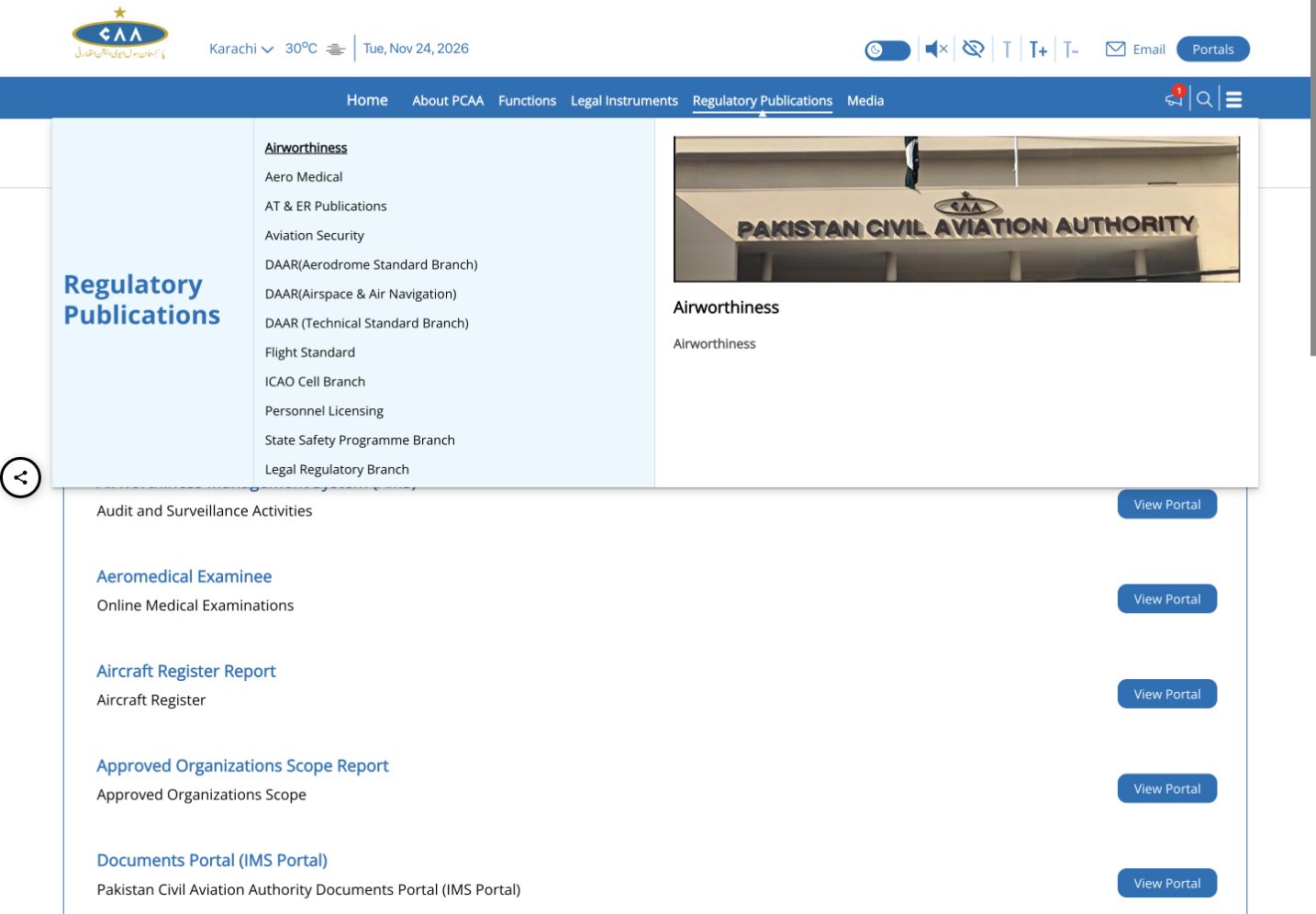
The regulatory publications menu groups material into discipline-oriented categories such as airworthiness, personnel licensing and flight standards. This organizes discovery around the subject a visitor is looking for and keeps related information within a recognizable structure.
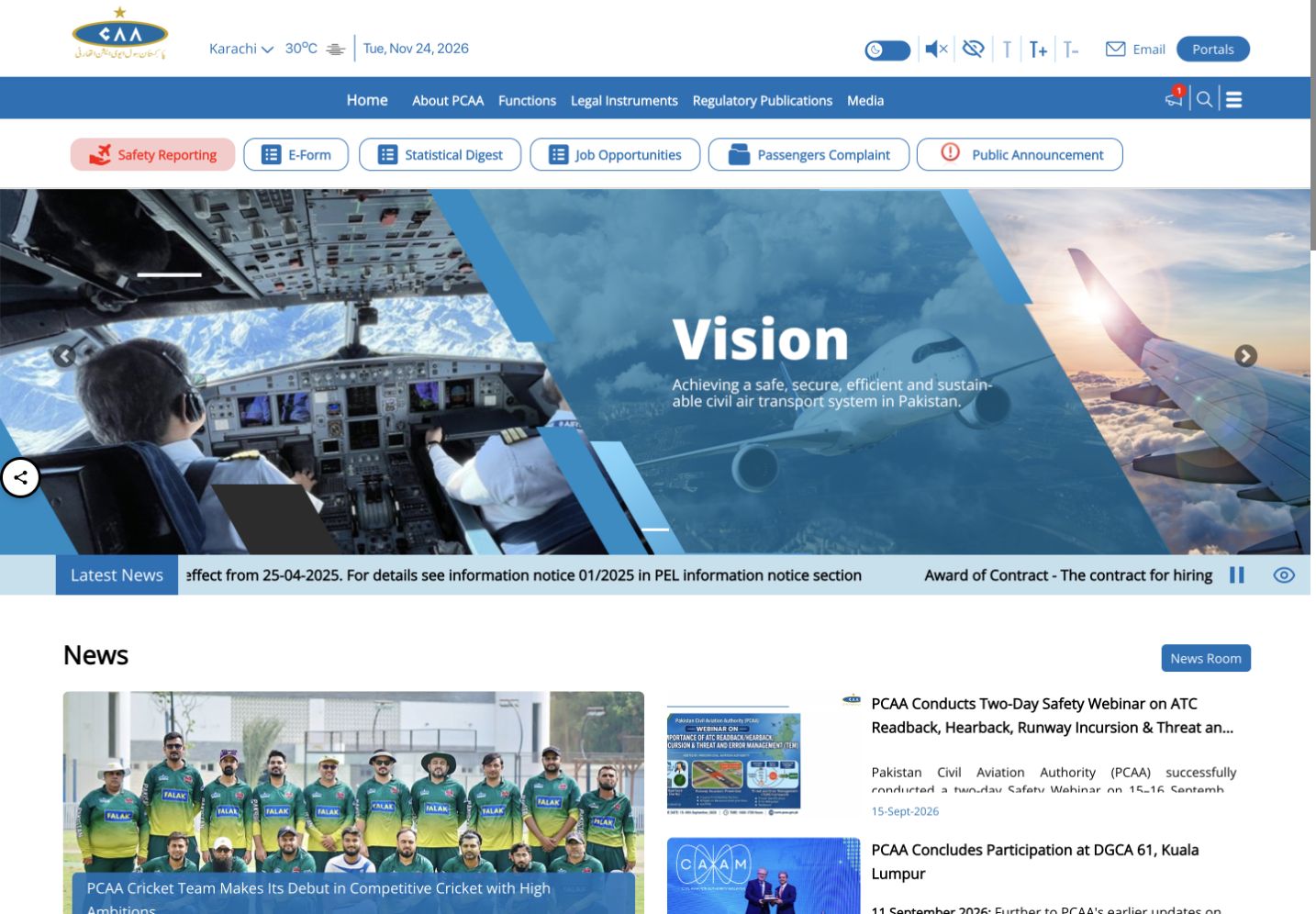
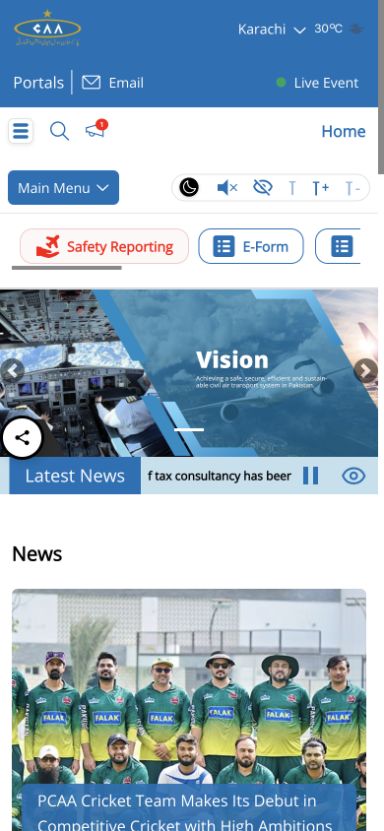
The homepage presents notices and news alongside routes into the regulator’s functions. This gives current information a place in the public experience while keeping access to reference material available through navigation.
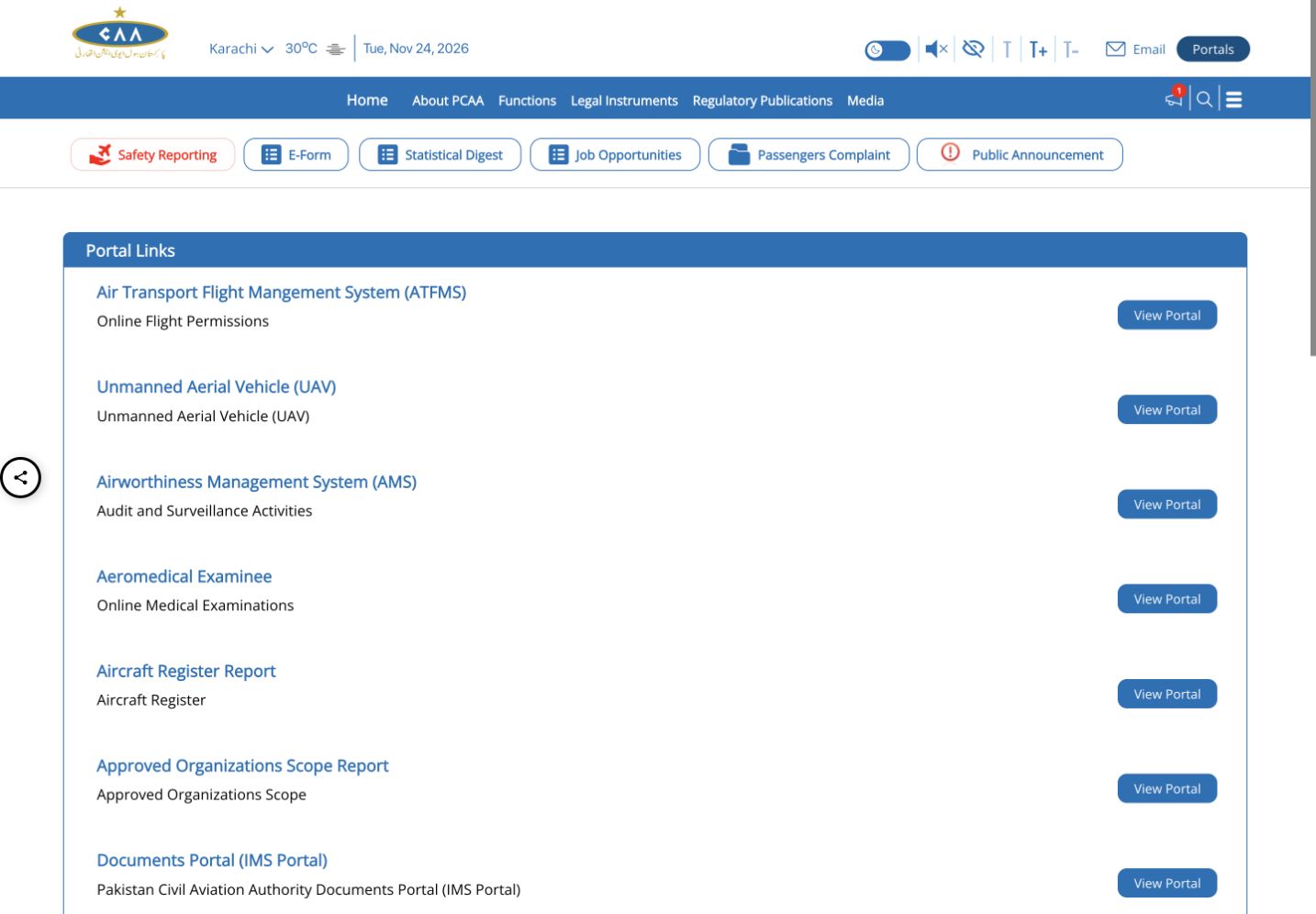
The portal directory brings together destinations for licensing, airworthiness, examinations and other services. Within the public website, this directory provides a clear route to the appropriate specialist application.
Technology architecture
The stack combines content management, visitor-facing presentation, application interfaces and a dedicated custom process layer.
Frontend
The public-facing website interface and its visitor journeys.
APIs
The application service boundary connecting interface requests with backend functionality.
Content management
The CMS foundation for managing and delivering website content.
Process logic
A dedicated engine for the project’s custom business workflows.
The custom workflow engine is a confirmed part of the PCAA project as well as the PAA project. It is presented as the application’s custom process layer, distinct from the content management work performed through Umbraco.
The architecture separates public communication, interface presentation, application services and process logic. React provides the visitor-facing layer, Umbraco supports managed content, .NET Core APIs establish application interfaces, and the custom workflow engine supplies the distinct process component.
Implementation focus
Group institutional functions and publication families so visitors can identify the relevant subject and information route.
Maintain PCAA-specific branding, content and service discovery rather than presenting the regulator as an airport operations portal.
Retain the custom workflow engine as an identifiable architectural component alongside the CMS, React interface and API services.
The result
The website gives Pakistan’s aviation regulator a dedicated digital presence, with routes into institutional functions, regulatory publications, news and service destinations. Its content and interface are tailored to the regulatory audience, with a separate application architecture supporting publishing and custom process requirements.
Build with MMC
Talk to our Karachi team about your audiences, content structure, application services and process requirements.
Our reach
 Pakistan
 USA
 Australia
 Belgium
 Paraguay
 Denmark
 UK
 Afghanistan
 Philippines
 Turkey
 Thailand
 Canada
 Sweden
 Singapore
 Colombia
 UAE
 New Zealand
 Kyrgyzstan
 France
 Switzerland
 Tanzania
 Uganda
 Tajikistan
 China
 Italy
 Finland
 Qatar
 Zimbabwe
 Saudi Arabia